
Seasonal Pruning Guide UK: Best Times & Tips for Healthy Plants
Discover the best times to prune plants in the UK by season. From roses to fruit trees, learn practical tips for healthier growth, more blooms, and bigger harvests.
Pruning might sound intimidating, but understanding how seasonal changes affect your plants takes a lot of the guesswork out of it. Working with nature’s rhythms lets you keep your garden tidy, healthy, and bursting with colour or tasty fruit at the right times. When I started learning about pruning, the timing felt confusing, but a season-by-season guide made things super clear.
Hello & welcome, I’m a Hampshire gardener who’s spent most of my life outdoors, inspired by a childhood surrounded by countryside and parents who loved their allotments. For the past five years I’ve been working as a self-employed gardener, growing my skills through hands-on experience, plenty of research, and a genuine passion for watching gardens change through the seasons. Now I share what I’ve learned to help others enjoy creating beautiful, thriving outdoor spaces of their own.
Garden Nest Living grew from a simple idea: to share my love of gardens and creating calm, beautiful spaces, both inside and out. When you buy through my affiliate links, you are allowing me to keep sharing inspiration, ideas and products… at no extra cost to you. Thank you for being a part of my journey!
Why Pruning According to Season Matters
Benefits of Seasonal Pruning for Garden Health
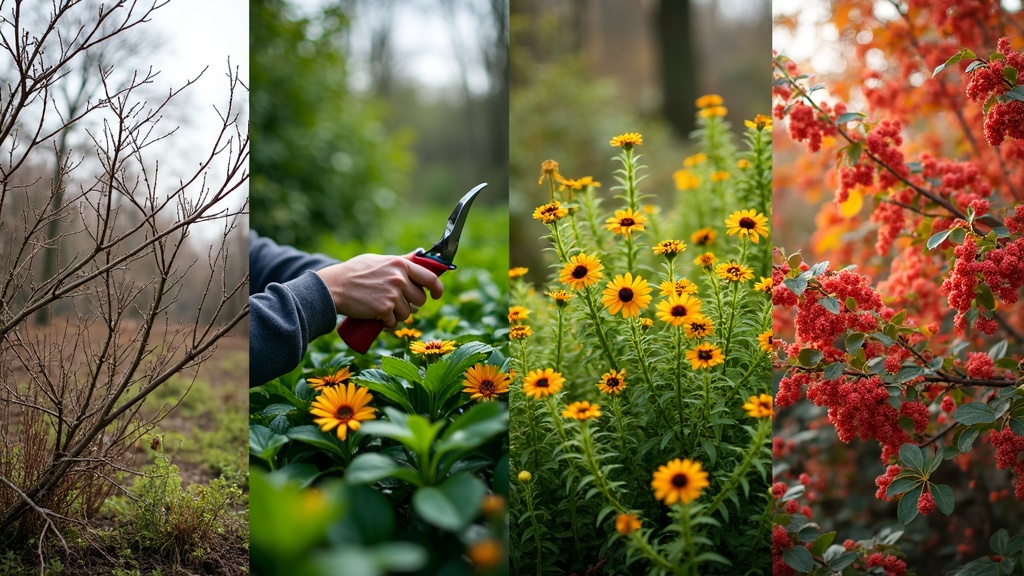
Most plants go through periods of dormancy, growth, and flowering or fruiting throughout the year. Getting your timing right helps you avoid cutting away flower buds by mistake, keeps plants in good shape, and encourages strong blooming or fruiting. Each season brings its own “to-do” list for the garden.
How UK Climate Affects Pruning Times
If you’re in the UK, changing weather adds another layer; late frosts, damp summers, and unpredictable autumns all play a part. I learned pretty quickly that a pruning calendar and a basic understanding of what happens in each season help avoid disappointment and wasted effort.
Winter Pruning Guide (UK)
Winter is when most plants take a break. Trees and shrubs are usually dormant, making this a peaceful time for pruning jobs that could be stressful in warmer weather. Just watch out for frost. Trying to prune frosted branches can cause more damage.
What to Prune in Winter (Hardy Trees, Roses, Clematis)
- Hardy trees and shrubs. Most are asleep, so it’s easier to see the branching structure and remove dead or unwanted wood.
- Fruit bushes and top fruit branches. I usually do this on frost-free days to reduce disease risk.
- Clematis group 3 (the late-summer flowering kind). Cut back hard now for loads of blooms later.
- Summer-flowering shrubs like buddleia and Hydrangea paniculata before spring growth starts up.
- Roses (hybrid tea, floribunda). Prune hard for a fresh flush of strong shoots and summer flowers.
- Dead stems of herbaceous perennials. I remove them now for a tidy look.
- Grapevines. Trim side branches to two buds (saves them from “bleeding” sap in spring).
Plants to Avoid Pruning in Winter
Don’t prune tender shrubs, evergreens, and fruit trees in the cherry or plum family. Pruning these now can encourage disease and frost damage.
Spring Pruning Guide (UK)
As the days warm up, plants start waking up and sap begins to flow. This is the time to help things get a positive start by pruning out old growth and shaping plants that respond well during the early part of the season. I wait until late frosts have passed before picking up my secateurs.
Best Plants to Cut Back in Spring (Grasses, Dogwoods, Perennials)
- Shrubs grown for dramatic leaves or lovely coloured stems (like dogwoods or willows).
- Dead stems from ornamental grasses and old stems from evergreen shrubs (they look fresher and lusher if renewed now).
- Deciduous shrubs that flower after autumn leaf fall, pruned soon after they finish blooming.
The Chelsea Chop: Timing and Benefits
- Chelsea chop (usually late May): Take late-summer perennials (like sedum or phlox) and cut them back by a third or a half to encourage more bushy growth and extra blooms.
What Not to Prune in Spring
Do not prune Spring or early Summer flowering shrubs before they flower, and fruit trees or bushes; pruning these too early removes the wood carrying the next round of flowers or fruit.
Summer Pruning Guide (UK)
Summer in the UK can be lively for plants, with warm temperatures and brighter light encouraging strong growth. Pruning now is all about tidying, maintaining shape, and sometimes getting that second flush of flowers. I like to prune after plants have had their main show, not before.
Pruning After Flowering: Roses, Perennials, and Hedges
- Spent stems from spring-flowering perennials. Cutting these now stops seed setting and redirects energy into new growth.
- Early Summer perennials after they’ve flowered. Many bounce back for a second go.
- Hedges, once their new growth has stiffened up.
Fruit Tree Pruning for Better Yields
- Bush fruit like gooseberries and currants after you’ve picked the fruit. Keep strong new shoots for next year.
- Fruit trees. I trim soft green shoots to two or three leaves; this keeps trees shapely and encourages fruiting rather than lots of useless leafy growth.
Plants to Avoid Cutting in Summer
Avoid pruning late Summer flowering shrubs (wait until they finish), and plants that bleed sap (like birch, maple, or grapevine).
Autumn Pruning Guide (UK)
As temperatures cool, many plants wind down and the risk of wind damage increases. Autumn pruning is mainly for safety, to keep shrubs and bushes tidy, and remove anything that might get damaged in windy weather. I try not to go overboard, since lots of plants cope better when pruned in late winter or spring instead.
Preparing Shrubs and Climbers for Winter
- Flowering shrubs and fruit bushes in exposed spots. Cutting these back helps prevent wind-rock and broken branches.
- Hardy climbers. I cut back long side shoots to about three buds for a neater look.
Pruning Berry Canes and Fruit Bushes
- Autumnfruiting berries. Remove old canes and tie in new ones for next season’s crop.
- Deciduous trees and shrubs. Thin out crowded or dead wood for better air movement and structure.
- Summerfruiting raspberries. After harvesting, I remove old canes and keep 6–8 strong new ones.
Plants to Leave Until Late Winter or Spring
Leave tender shrubs (like oleander) and most border perennials or ornamental grasses. They shelter beneficial insects and birds through winter.
Top 10 Facts: Pruning Your Plants According to Season
Plant Growth Cycles Matter
- Summer flowers bloom on new shoots, while winter or spring ones flower from last year’s wood. Timing matters for the best display.
Dormant vs. Active Growth
- Winter pruning on woody plants encourages spring growth; midsummer pruning controls size and tidies up.
Choose your Tools Wisely
- Use sharp secateurs for small stems, loppers for thicker branches, and saws for large limbs. Clean cuts and the right tool help plants heal.
Winter Focus
- Best for hardy trees and bushes on frost-free days. It’s all about removing dead wood and shaping the plant.
Spring Energy
- Cut away old stems as sap rises, especially for ornamental grasses and some shrubs. The Chelsea chop also happens now.
Summer Maintenance
- Focus on deadheading, shaping, and improving fruit quality. Let late-flowering shrubs be until they’ve finished blooming.
Autumn Reset
- Tidy up as plants slow down, especially to prevent wind-rock in exposed areas or with berries and soft fruit canes.
Healthy Plants are Better Pruned
- Remove weak, dead, or crossing branches for less disease and better air flow.
Flowering Dictates Pruning
- Prune spring-flowering shrubs after they’ve flowered, summer ones in late winter, and autumn-fruiters as soon as you finish picking.
Sap Problems
- Some trees bleed if cut at the wrong time (birch, walnut, grapevine). Check for sap flow before trimming and hold off if it starts running fast.
Quick Reference: UK Pruning Calendar
Pruning Schedule by Plant Type (Table + Cheat Sheet)
If you’re gardening in the UK, here’s a quick plant calendar for when to tackle key pruning jobs:
Winter
- Hardy trees and roses (on frost-free days). Leave tender shrubs alone.
Spring
- Deciduous shrubs after flowering, cut back old herbaceous stems, Chelsea chop late-summer perennials.
Summer
- Deadhead spring bloomers, shape hedges, trim fruit trees.
Autumn
- Prune flowering shrubs in windy spots, tidy climbers, remove old berry canes.
Pruning Schedule by Plant Type (UK)
| Plant Type | Winter | Spring | Summer | Autumn |
|---|---|---|---|---|
| Hardy Trees & Shrubs | ✔ | |||
| Roses (Hybrid tea, Floribunda) | ✔ | |||
| Fruit Trees (Apples, Pears) | ✔ | |||
| Clematis (Group 3) | ✔ | |||
| Hydrangea paniculata | ✔ | |||
| Dogwoods/Willows | ✔ | |||
| Ornamental Grasses | ✔ | |||
| Perennials (Chelsea Chop) | ✔ | |||
| Gooseberries & Currants | ✔ | |||
| Hedges | ✔ | |||
| Berry Canes (Raspberries, Blackberries) | ✔ | |||
| Climbers (Hardy) | ✔ |
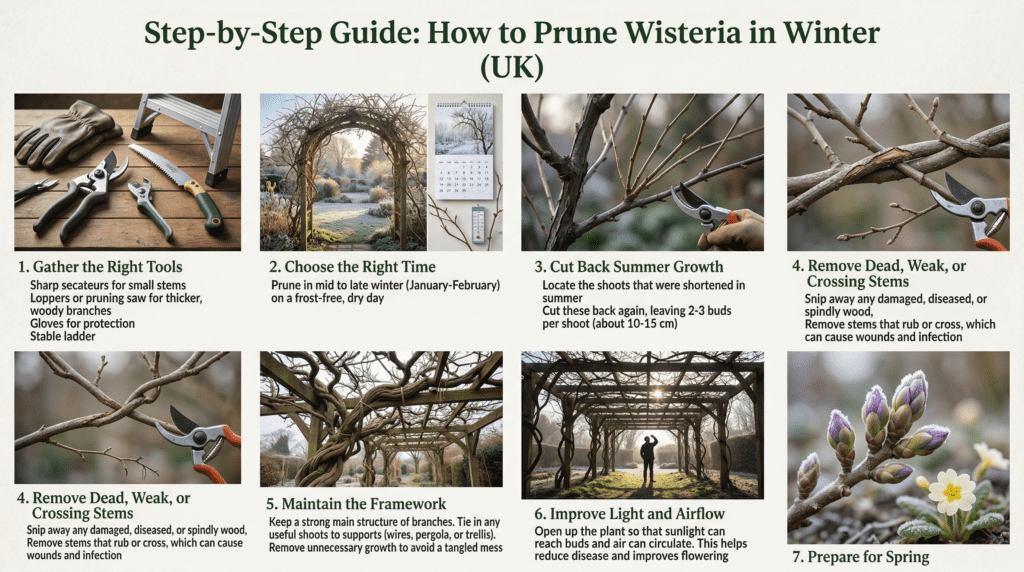
Step-by-Step Guide: How to Prune Wisteria in Winter (UK)
Winter pruning sets up your wisteria for strong growth and abundant blooms in spring. Here’s how to do it safely and effectively:
Best time:
Prune in mid to late winter (January–February) on a dry, frost-free day. Wisteria is also pruned in summer (July–August) to control growth and encourage flowering.
Tools
- Secateurs (small stems)
- Loppers or pruning saw (thicker wood)
- Gloves and a stable ladder
Keep tools clean to prevent spreading disease.
Core principles
- Prune twice a year (summer + winter)
- Aim for a strong framework with short flowering spurs
- Keep growth controlled, tidy, and well-spaced
- Maximise light and airflow
Winter pruning (main prune)
- Shorten summer growth again
Cut back shoots that were pruned in summer to 2–3 buds (about 10–15 cm).
These buds will produce flowers. - Remove unwanted wood
Cut out dead, weak, or damaged stems. Remove crossing or rubbing branches. - Maintain the framework
Keep the main structural branches (trained along wires, pergolas, or walls).
Tie in useful shoots and remove excess growth. - Open up the plant
Thin crowded areas to improve light and airflow, which helps flowering and reduces disease. - Check shape and balance
Step back and ensure an even, well-spaced structure that’s easy to manage.
Summer pruning (essential)
- Cut long, whippy shoots back to 5–6 buds
- Controls vigorous growth
- Encourages formation of flower buds for the following year
Aftercare
- Tie in new growth to supports neatly
- Keep the base clear of debris
- No special wound treatment is usually needed
Avoid
- Skipping summer pruning (leads to excessive leafy growth, fewer flowers)
- Letting stems become tangled and overcrowded
- Cutting back main structural branches unnecessarily
- Ignoring support — wisteria needs strong training
Key tip:
Wisteria flowers best on short spurs, so regular pruning is all about turning long shoots into compact, flowering growth.
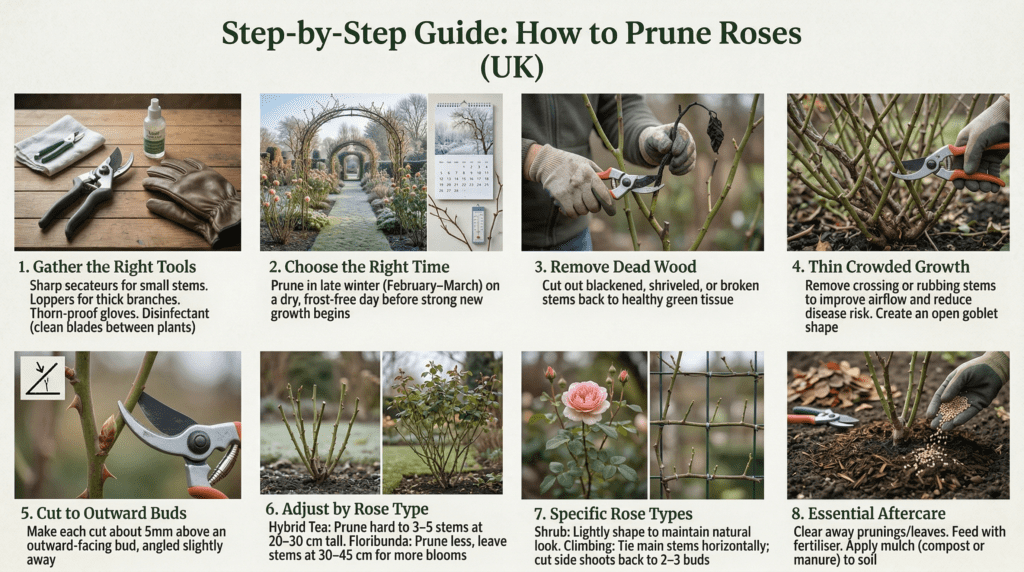
Step-by-Step Guide: How to Prune Roses (UK)
Pruning roses encourages healthy growth, improves air circulation, and produces stronger, more beautiful blooms. Follow this process in late winter to early spring (February–March), before new growth gets underway.
Best time:
Late winter to early spring (February–March), on a dry, frost-free day before strong new growth begins.
Tools
- Sharp secateurs
- Loppers (for thick stems)
- Thorn-proof gloves
- Disinfectant (to clean blades between plants)
Clean, sharp tools help prevent disease and make clean cuts.
Core principles
- Remove dead, diseased, or damaged wood first
- Aim for an open, goblet shape (clear centre for airflow)
- Cut just above an outward-facing bud
- Keep cuts clean and angled slightly away from the bud
Step-by-step pruning
- Remove dead or unhealthy wood
Cut out blackened, shrivelled, or broken stems back to healthy tissue. - Thin crowded growth
Remove crossing or rubbing stems to improve airflow and reduce disease risk. - Shape the plant
Create an open centre so light and air can circulate freely. - Cut to outward-facing buds
Make each cut about 5 mm above a bud pointing away from the centre.
Adjust by rose type
- Hybrid Tea roses:
Prune hard, leaving 3–5 strong stems at about 20–30 cm tall. - Floribunda roses:
Prune less severely, leaving stems around 30–45 cm for more blooms. - Shrub roses:
Lightly shape and remove older wood, keeping a natural look. - Climbing roses:
Cut side shoots back to 2–3 buds and tie main stems horizontally to encourage flowering.
Aftercare
- Clear away all prunings and fallen leaves to reduce disease (especially blackspot).
- Feed with a rose fertiliser.
- Apply mulch (compost or well-rotted manure) to retain moisture and improve soil.
Avoid
- Pruning in autumn (can encourage frost damage)
- Leaving stubs or making rough cuts
- Letting the centre become crowded
- Skipping tool cleaning between plants (spreads disease)
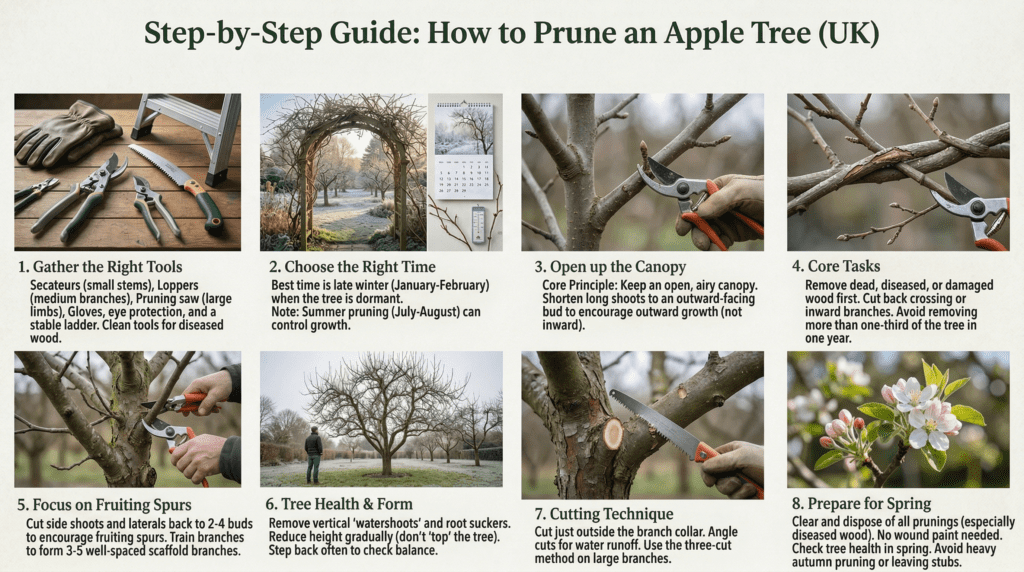
Step-by-Step Guide — How to Prune an Apple Tree (UK)
Pruning apples improves fruit size, light into the canopy and tree health. This guide covers dormant (winter) pruning for established and young trees, plus a few summer tips.
Best time:
Prune in late winter (January–February) when the tree is dormant. Light pruning can be done in summer (July–August) to control vigorous growth.
Tools
- Secateurs (small stems)
- Loppers (medium branches)
- Pruning saw (large limbs)
- Gloves, eye protection, stable ladder
Clean tools if you cut diseased wood.
Core principles
- Remove dead, diseased, or damaged wood first
- Keep an open, airy canopy for light and airflow
- Cut just above a bud or at the branch collar
- Avoid removing more than one-third of the tree in one year
Young trees (first 3–5 years)
- Shorten the main trunk after planting to encourage branching
- Select 3–5 well-spaced scaffold branches
- Remove competing leaders
- Cut side shoots back to 2–4 buds to form fruiting spurs
- Train branches outward (not inward)
Established trees (annual winter pruning)
- Remove dead/diseased wood
- Thin crowded areas (remove crossing or inward branches)
- Shorten long shoots to an outward-facing bud
- Cut fruiting laterals back to 2–4 buds
- Remove watershoots (upright growth) and root suckers
- Reduce height gradually if needed (don’t “top” the tree)
Step back often to check shape and balance.
Summer pruning (optional)
- Remove watershoots
- Trim excessive growth to reduce shading
- Keep it light, especially in dry weather
Cutting tips
- Cut just outside the branch collar
- Angle cuts so water runs off
- Use the three-cut method for large branches to prevent tearing
Aftercare
- Clear and dispose of prunings (especially diseased wood)
- No need for wound paint in most cases
- Check tree health in spring
Avoid
- Heavy autumn pruning
- Leaving stubs or rough cuts
- Removing too much at once
- Ignoring overall shape
More detailed guides are available on the Royal Horticultural Society website if you want deeper information for specific plants. Gardeners World also has a really good & detailed pruning guide.
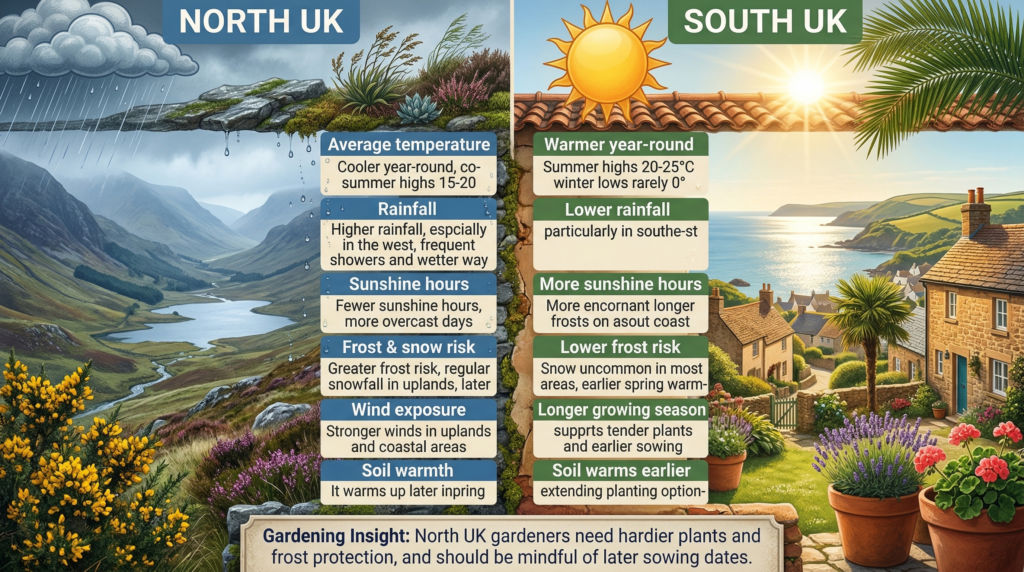
UK Regional Climate Comparison: North vs South
| Feature | North UK (Scotland, Northern England, Highlands) | South UK (Southern England, London, South Coast) |
|---|---|---|
| Average Temperature | Cooler year-round; summer highs around 15–20°C; winter lows often below 0°C | Milder climate; summer highs 20–25°C(sometimes higher in heatwaves); winter rarely below 0°C |
| Rainfall | Higher annual rainfall, especially in western uplands; frequent showers | Lower rainfall overall, especially in the southeast; drier summers |
| Sunshine Hours | Fewer sunshine hours per year; often cloudy or overcast | More sunshine hours, especially along the south coast |
| Frost Risk | Higher risk of frost and snow in winter; shorter frost-free season | Lower frost risk; longer frost-free growing season |
| Wind Exposure | Stronger winds, especially in coastal and upland areas | Generally milder, though exposed coasts can still be windy |
| Growing Season | Shorter growing season due to colder temps and late frosts | Longer growing season; supports a wider range of tender plants |
| Soil Warmth | Soils warm up later in spring, slowing early planting | Soils warm earlier in spring, extending planting opportunities |
Common Pruning Mistakes to Avoid
Pruning Too Early or Too Late
- If you prune before or right after a frost, branches may die off or fail to regrow properly. Keeping track of the weather helps.
Over-Cutting and Damaging Flower Buds
- Some plants (like camellia or rhododendron) should not be pruned in winter because they set their buds early.
- I’ve gotten a bit too snip-happy now and then. Remember, it’s better to underprune than cut away next season’s flowers by mistake!
Using the Wrong Tools
- Working with dull secateurs or old loppers can crush stems, creating wounds that invite disease. Regularly sharpening blades is pretty handy.
Advanced Pruning Techniques
After you get into it, you’ll start to spot how different pruning styles work for different plants. Here’s a cheat sheet:
Formative Pruning for Young Trees
Shape young trees while their limbs are small, removing competing leaders and crossing branches. This saves headaches later.
Regenerative Pruning for Shrubs
Every few years, cut older stems from shrubs to the ground. It keeps the plants young and vigorous. Works well for things like dogwood or elderberry.
Timing Based on Flowering Cycles
Don’t guess. A quick search for your plant’s flowering time (like “when to prune hydrangeas” or “when to prune wisteria”) helps a lot. Save links or notes on your phone for a speedy reference.
Don’t forget, observing your own garden’s patterns is golden. I keep a basic diary of when I do big pruning jobs and note what works best. Every garden has its own quirks, so noticing these patterns from year to year can help you fine-tune your approach and get better results.
FAQs – Seasonal Pruning in the UK
When is the best time to prune shrubs in the UK?
The best time to prune shrubs in the UK depends on the flowering season.
Spring-flowering shrubs: prune just after flowering.
Summer-flowering shrubs: prune in late winter or early spring.
Avoid pruning during frost or extreme heat.
What plants should not be pruned in winter?
Avoid pruning tender shrubs, evergreens, and fruit trees in the cherry or plum family during winter. They are prone to frost damage and diseases like silver leaf.
How do I know if I’ve pruned too much?
You may have over-pruned if the plant has bare stems, produces weak shoots, or flowers poorly the next season. A safe rule is to remove no more than one-third of the growth per year.
Conclusion – Master Seasonal Pruning for a Thriving Garden
Pruning might seem daunting at first, but over the years I’ve learned that working with the seasons makes it much more manageable—and even enjoyable. Observing how my garden changes throughout the year has taught me when to prune for healthy growth, vibrant flowers, or abundant fruit. Every branch I cut, every old stem I remove, is part of a rhythm that helps my plants thrive. Following a season-by-season guide, and keeping notes from my own garden, has turned pruning from a confusing chore into a rewarding practice. With patience, the right timing, and a little hands-on experience, anyone can help their garden flourish all year round.
About the Author: A Self-Taught Gardener’s Journey in Hampshire
I grew up surrounded by the rural beauty of the Hampshire countryside, where my earliest dream was to work with animals. After finishing school, I studied at Sparsholt College and earned a National Diploma in Animal Management.
Life, as it often does, took me in a different direction. I built and ran another business, got married, and became a proud mum to three wonderful boys. After the birth of my youngest in 2020, I found myself at a crossroads, ready for a new career. Gardening—something that had always been a passion—was the natural choice.
I’ve now been working as a self-employed gardener in Hampshire for over five years, but my love for gardening began long before that. Growing up, I spent countless hours outside helping my parents, both keen gardeners (with three allotments!). Being outdoors, nurturing plants, and watching gardens transform with the seasons has always brought me joy.
While much of my knowledge has come through hands-on gardening experience, trial and error, and plenty of research, I’ve also relied heavily on trusted resources like the Royal Horticultural Society, which has guided me in becoming a confident, self-taught gardener.
I created Garden Nest Living to share everything I’ve learned and to help others discover the same satisfaction in creating and enjoying beautiful outdoor spaces. Whether you’re looking for UK gardening advice, self-taught gardening tips, or inspiration for your own garden, my goal is to inspire and guide you on your gardening journey.
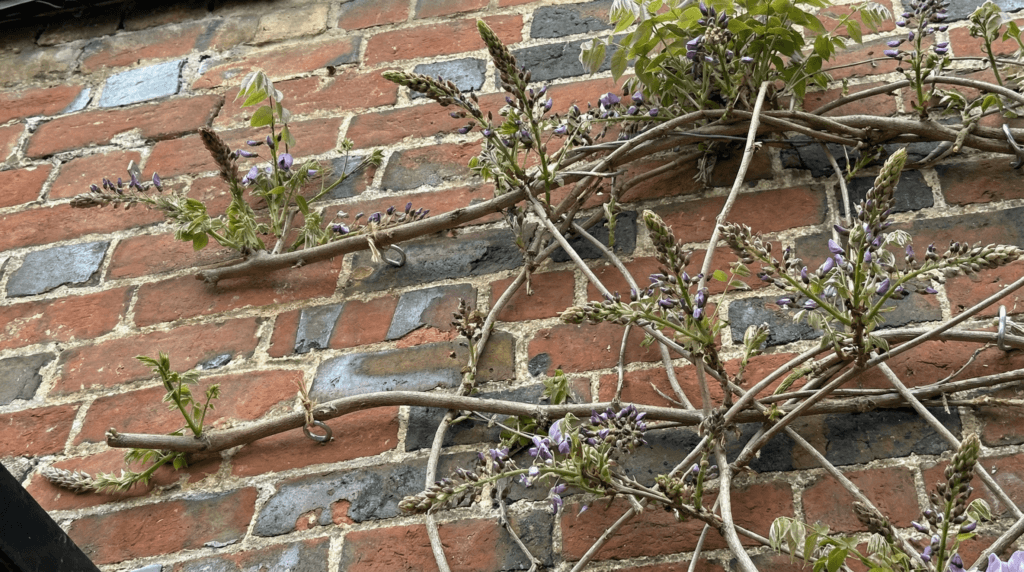

Wisteria starting to bud after being pruned. Pruning an Apple Tree in a client’s garden.
Hi, Jenny –
Planting and maintaining a garden can be a rewarding experience. However, I dread pruning because it can be time-consuming and tricky. However, this blog offered some practical tips to ensure plants/flowers remain healthy. I have a lot of hydrangeas in my garden; they bloom in late summer.
Now I know that pruning them after they have flowered is best. Waiting for winter might cause damage to the flowers.
In your garden, what is the most cumbersome plant/tree/shrub?
Anyway, thanks for the practical tips for pruning.
Cheers,
G
Hi G,
I totally get what you mean—pruning can feel daunting, especially when you don’t want to accidentally harm your plants! Hydrangeas are gorgeous, and yes, pruning them right after flowering is key to keeping those blooms healthy for next year.
In my garden, I’d say my rose bushes are the trickiest—they require careful timing and a bit of finesse to avoid damaging new growth. Some of the larger shrubs can also be surprisingly stubborn!
I’m glad the blog tips helped you feel more confident about pruning. With the right timing and technique, it does get easier—and seeing healthy, thriving plants is so worth it.
This seasonal pruning guide is such a gem — it breaks down the “when-to-prune” puzzle in a way that actually makes sense. I really appreciate how each season gets its own spotlight, showing what to trim or leave alone. It helps gardeners avoid mistakes like cutting off next season’s blooms or damaging plants in the wrong weather.
I have two quick questions: when you recommend the Chelsea Chop in late spring, do you aim for a specific percentage reduction, like a third or halfway? And with winter pruning on frost-free days, is there a simple way to check when it’s safe — maybe watching for sap flow or a weather window?
Thank you so much! I’m glad the seasonal guide is making pruning less intimidating.
For the Chelsea Chop in late spring, I usually aim to cut back about one-third to one-half of the plant’s growth – just enough to encourage bushier, more compact blooms without stressing it.
Regarding winter pruning on frost-free days, a simple approach is to check the forecast for a stretch of mild, dry weather and look for signs that the plant is still dormant – like buds staying tight and sap not actively flowing. If you notice sap starting to rise, it’s a hint that the plant is waking up, so pruning should be done before that point.
This is such a comprehensive guide, I’m glad I stumbled upon it. I’m very much a beginner when it comes to plants and gardens, but I want to learn more. I’m especially glad you included some information about cherry and plum trees specifically, as I have recently moved into a place with both of these in the backyard! I’ve thoroughly enjoyed this summer’s harvest, but we’re approaching winter now, and I need to know how to care for them.
I know your info is largely based on UK seasons. I live in Canada, but I imagine the info still translates, even if the seasons happen at different times of the year? Please correct me if I’m wrong.
Thanks so much for your lovely comment—I’m glad the guide was helpful! How wonderful to have cherry and plum trees in your new garden. You’re right, the care tips translate to Canada too—it’s just a matter of shifting the timing a little since winters are longer and colder. Over winter, focus on protecting roots with mulch, pruning during dormancy (but not in extreme cold), and checking for damage. Come spring, they should bounce back nicely!
The “Winter Pruning Guide (UK)” section really stood out to me for its clear, actionable advice and thoughtful timing. I appreciate how it breaks down not only what to prune like hardy trees, roses, and clematis but also why winter is ideal: dormancy reduces plant stress and makes structure easier to assess. The tip about pruning grapevines to prevent sap bleeding was something I hadn’t considered before, and it’s those little practical insights that make this guide so useful. It’s also refreshing to see warnings included, like avoiding cherry and plum trees in winter due to disease risk. One thing I’d love to know more about is: How do you tell if a winter day is “frost-free” enough to safely prune?
Thank you so much — I’m really glad you found the Winter Pruning Guide helpful! You’re absolutely right, those small practical tips can make a big difference. As for pruning on frost-free days, a good rule of thumb is to wait until temperatures are consistently above freezing and the ground isn’t hard with frost. Milder, dry days are ideal — if plants or branches feel icy or brittle, it’s best to hold off until they’ve thawed. Pruning during a brief midday warm spell can also help minimise any frost damage afterwards.
What a comprehensive and genuinely practical guide! I’ve always admired how pruning mirrors life and you remove what no longer serves to let new growth flourish. Back home in South Sudan, we didn’t call it pruning; we just “helped trees breathe” after harvest, but the principle was the same.
It’s fascinating how timing and climate shape every garden differently. Do you think UK gardeners in the colder north should delay spring pruning compared to those in the south, or just adapt plant by plant? As we say in Africa, “The tree that is pruned well bears sweeter fruit.”
— John Monyjok Maluth
Hi John,
Thank you so much for sharing that beautiful perspective — I absolutely love the phrase “helping trees breathe.” It captures the spirit of pruning perfectly.
You’re absolutely right that timing and climate make such a difference. In the UK, gardeners in the colder north often do need to delay spring pruning slightly — sometimes by just a few weeks — to avoid frost damage on new growth. That said, adapting plant by plant is always the best approach. Some shrubs and fruit trees prefer a light winter prune, while others respond better once the risk of frost has passed.
And I adore that proverb — “The tree that is pruned well bears sweeter fruit.” It’s a wonderful reminder that good care, patience, and timing always reward us in the end. Thank you for bringing that wisdom into the conversation!